Home » How We Treat » Cupping Therapy in Lenexa, KS
Persistent muscle tension, restricted movement, or lingering soreness can interfere with daily activity and limit how comfortably you move. Many individuals throughout Lenexa and the greater Kansas City area seek treatment options that address soft-tissue restriction without medication or invasive procedures. When muscles, fascia, or connective tissues lose mobility, discomfort may persist despite rest or stretching alone.
At PWR Physio, cupping therapy is used as part of a structured, evidence-informed treatment approach designed to reduce soft-tissue restriction, improve circulation, and support more efficient movement. This technique is incorporated thoughtfully and clinically, based on individual assessment and functional goals.
At PWR Physio, cupping therapy begins with a detailed clinical evaluation performed by a licensed physical therapist. This assessment examines posture, movement patterns, tissue mobility, and areas of muscular restriction. Identifying where tissues are limited or overloaded allows your therapist to determine whether cupping therapy is appropriate and how it should be integrated into your plan of care.
Cupping therapy may be used to support treatment goals such as:
Reducing muscular tightness and tissue restriction
Improving circulation to targeted areas
Enhancing mobility of the skin, fascia, and underlying structures
Decreasing discomfort associated with overuse or repetitive strain
Supporting recovery when paired with corrective exercise and manual therapy
If you are seeking a physical therapist in Lenexa, KS who offers cupping therapy within a clinical physical therapy setting, our team is prepared to provide clear guidance and individualized care.
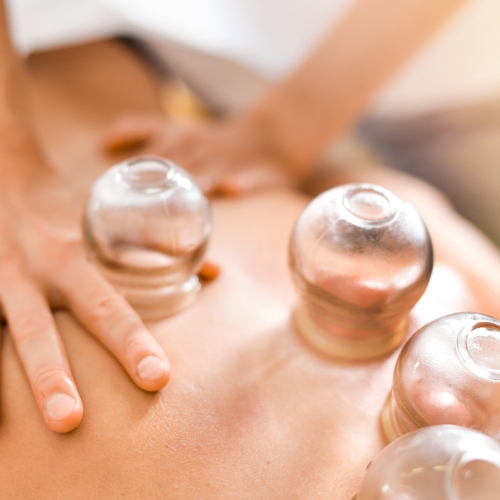
Cupping therapy involves the application of specialized cups to the skin to create gentle negative pressure. Unlike techniques that compress tissue, cupping works by lifting and separating the skin, fascia, and underlying structures. This tissue distraction allows restricted layers to move more freely and may help reduce localized tension and discomfort.
During treatment, your physical therapist applies silicone or pump-based cups to specific areas identified during evaluation. The suction draws blood flow to the region and encourages movement between tissue layers that may otherwise remain adhered. This process can improve tissue hydration, reduce sensitivity, and prepare the area for movement-based therapy.
In a clinical setting, cupping therapy is not used in isolation. It is commonly combined with mobility exercises, strengthening, and manual therapy to support lasting improvement and functional recovery.
Cupping therapy can be a useful tool for patients who experience persistent muscle tightness, soreness with activity, or restricted movement that does not respond well to stretching alone. When used appropriately, cupping may provide benefits that support a broader plan of care, including:
Reduced muscular tightness in areas prone to guarding or overuse
Improved soft-tissue mobility, particularly when fascial restriction limits movement
Enhanced circulation to targeted tissues that are irritated or slow to recover
Decreased sensitivity at trigger points or tender regions
Improved comfort with movement, especially when paired with corrective exercise
Support for recovery after repetitive strain or athletic training demands
Your physical therapist will determine whether cupping is appropriate for your condition and will integrate it into your plan in a way that supports measurable progress rather than short-term symptom chasing.
Many patients are curious about how cupping feels and whether it will be painful. In most cases, cupping therapy is well tolerated. The suction often creates a strong pulling sensation and a feeling of pressure, particularly in tight areas. However, treatment is paced carefully, and your therapist will adjust the intensity and duration to remain within a comfortable range.
It is also important to understand that cupping can leave circular discoloration on the skin. These marks are not typically bruises from impact; rather, they reflect changes in superficial blood flow caused by negative pressure. The discoloration varies from person to person and commonly fades over several days, though it can last longer in some cases.
Mild soreness may occur after treatment, especially if the region was highly restricted. This response is temporary and often improves with gentle movement, hydration, and the use of heat or cold as appropriate. Your therapist at PWR Physio will explain what to expect and how to manage short-lived sensitivity while your treatment plan progresses.
A licensed physical therapist evaluates your movement patterns, soft-tissue mobility, symptom behavior, and functional limitations. Cupping is recommended when tissue restriction, muscular guarding, or local sensitivity appears to be limiting your recovery or interfering with movement.
Most patients describe a firm pulling sensation and localized pressure beneath the cups. Tight regions may feel more intense initially, but the sensation typically settles as the tissue adapts. Your therapist will adjust suction and time to keep treatment manageable.
Cupping creates negative pressure that draws blood flow toward the skin and superficial tissues. The resulting discoloration is common and usually resolves on its own. The appearance and duration vary based on skin sensitivity and the level of restriction in the tissue.
Some patients notice improvement after a few visits, while others benefit from periodic treatment integrated into a broader plan. The number of sessions depends on the condition, the extent of tissue restriction, and whether cupping is being used to support mobility, recovery, or pain reduction.
Yes. Cupping is often most effective when paired with strengthening, mobility work, and movement retraining. Your physical therapist may use cupping to reduce restriction and then reinforce those changes through exercise and functional training.
You may request a visit through our appointment request form. A therapist will evaluate your condition and determine whether cupping therapy is appropriate for your plan of care.
If you are dealing with persistent muscle tightness, recurring soreness, or restricted mobility that limits daily activity, cupping therapy may be an appropriate addition to your treatment plan. The clinicians at PWR Physio will evaluate your condition thoroughly and determine whether cupping therapy fits your goals and presentation.
To arrange your visit, you may schedule directly through our clinic using the appointment request form.
Our team welcomes the opportunity to assist you with steady, evidence-based care and a commitment to supporting your recovery.
