Home » What We Treat » Work Injury Treatments in Lenexa, KS
Work-related injuries can disrupt your routine, limit mobility, and create uncertainty about when you’ll be able to return to your job. Whether your injury occurred from lifting, repetitive strain, a fall, or prolonged physical demand, the impact can extend beyond physical discomfort. Many individuals throughout Lenexa and the greater Kansas City area seek structured care that restores strength and function without unnecessary procedures or prolonged downtime.
At PWR Physio, work injury treatment is delivered through an evidence-informed rehabilitation plan designed to reduce pain, improve movement efficiency, and rebuild work-specific capacity. Our goal is not only to relieve symptoms, but to prepare you to safely resume job duties with confidence.
At PWR Physio, your recovery begins with a comprehensive clinical evaluation performed by a licensed physical therapist. This assessment examines joint mobility, muscular strength, posture, lifting mechanics, and tolerance to occupational tasks. Understanding the physical demands of your specific job allows your therapist to develop a plan tailored to your recovery and return-to-work goals.
Treatment may include progressive strengthening to restore lifting capacity, mobility work to reduce stiffness, manual therapy to calm irritated tissues, and movement retraining to improve job-specific mechanics. When appropriate, we also provide ergonomic education and load-management strategies to reduce reinjury risk.
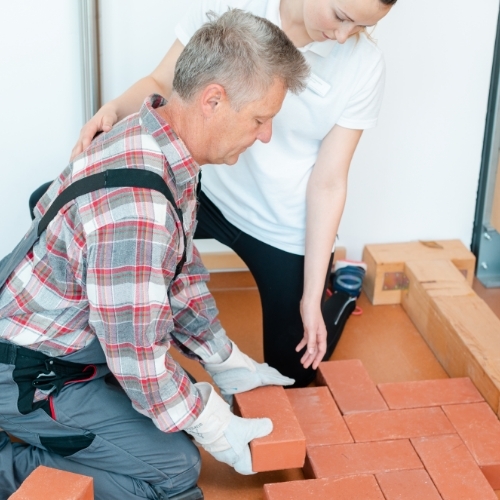
Work injuries often occur when physical demand exceeds tissue tolerance. In some cases, symptoms appear suddenly after a lifting incident or fall. In others, discomfort builds gradually due to repetitive motion, sustained posture, or insufficient recovery between shifts.
Contributing factors frequently include muscular imbalance, reduced joint mobility, poor lifting mechanics, workstation setup limitations, or cumulative overuse. Over time, these mechanical stresses can irritate muscles, tendons, ligaments, or spinal structures.
A licensed physical therapist will identify how these elements interact and explain why your symptoms developed. Addressing the underlying mechanical contributors — rather than simply masking pain — is essential for long-term recovery and sustainable return to work.
Accidents (or diseases) that occur while an employee is on the job are workplace injuries. Many jobs, such as construction, law enforcement, and nursing, can be dangerous.
Surprisingly, even office workers can sustain workplace injuries! Believe it or not, sitting in the same position for long periods of time is physically taxing.
Please contact us if you have suffered any of the work-related injuries listed below PWR Physio.
Work injury rehabilitation is designed to restore more than just temporary comfort. A structured physical therapy program focuses on rebuilding strength, stability, coordination, and endurance so you can safely meet the physical demands of your job again. By addressing both the injured tissue and the movement patterns that contributed to the issue, therapy supports long-term recovery rather than short-term symptom management.
Patients undergoing work injury rehabilitation at PWR Physio often experience:
Improved strength and lifting tolerance for job-specific tasks
Reduced joint stiffness and muscular tightness
Better posture and body mechanics during repetitive movements
Enhanced balance and coordination to reduce fall risk
Increased endurance for prolonged standing, walking, or manual labor
Greater confidence returning to full work duties
Lower likelihood of recurring workplace injuries
As mobility and strength improve, daily activities and occupational responsibilities typically become more manageable and predictable. The goal is not only to relieve pain but to restore reliable function so you can return to work safely and sustainably.
Many individuals are understandably concerned about whether therapy will intensify symptoms. Work injury rehabilitation is designed to be progressive, measured, and responsive to your comfort level. Your licensed physical therapist selects interventions that reduce irritation rather than provoke it.
Some mild muscular soreness may occur as tissues adapt to strengthening and mobility work. This response is typically temporary and reflects improved tolerance to activity. For most individuals, any post-session sensitivity resolves within 24 to 48 hours.
At PWR Physio, each session is adjusted carefully to ensure steady improvement without unnecessary discomfort. The objective is consistent, sustainable progress — not sharp or lasting pain.
Do you have a workplace injury? If so, please schedule an appointment with our Lenexa, KS physical therapy clinic. Our physical therapists will also work with your worker’s compensation caseworker to ensure that you recover quickly and get back to your normal routine!
You can get the treatment you need for your workplace injuries at PWR Physio.
Sprains and strains occur frequently, and they are often confused with one another! A sprain happens when a ligament is overstretched or torn, whereas a strain happens when a muscle or tendon is overstretched. Both of these injuries should be evaluated by a medical professional to ensure that no long-term damage occurs.
Bursitis occurs when the tendons rub against the anti-friction sacs known as “bursae,” causing irritation and discomfort. This condition can also affect your elbow, shoulder, and hip, but it most commonly affects your foot and heel.
A fracture occurs when the bone is subjected to excessive force or trauma, causing it to crack or break completely. A foot or ankle fracture could necessitate weeks of rest to ensure proper healing.
Several tendons work together to form the arch of your foot. When the tendons pull together properly, your foot will form a proper arch. Your foot will form a very small arch or no arch at all if the tendons do not pull together properly. This is known as a “fallen arch” or “flat foot,” and it can cause pain or discomfort in the long run.
Plantar fasciitis is caused by an inflammation of the connective tissue on the bottom of the feet. This can happen as a result of aggravated overuse, such as prolonged standing, poor posture, or footwear that lacks proper arch support.
Overuse of the tendons can result in tendonitis, a condition in which they become inflamed over time. Even simple tasks, such as walking to the end of the driveway to check the mail, can be difficult with tendinitis. This condition can become chronic and excruciatingly painful over time, exacerbating the situation.
Arthritis is a common inflammatory condition that affects joints and causes foot pain. Osteoarthritis and rheumatoid arthritis are the most common types. Both types of arthritis can have a significant impact on the foot and ankle joints. Arthritis can affect people of all ages.
When the tarsal tunnel (the nerve that runs from the ankle to the foot) becomes pinched and painfully inflamed, this happens. Sharp, shooting pains, “pins and needles” sensations, and burning sensations in the feet are all symptoms.
