Home » What We Treat » Foot Pain Relief in Lenexa, KS
Foot pain can affect far more than your ability to walk. It can limit daily activity, change how you move, and make even simple routines uncomfortable. Many individuals throughout Lenexa and the greater Kansas City area begin avoiding movement, exercise, or time on their feet because of ongoing discomfort.
If foot pain has started to interfere with your mobility or confidence, it may be time to take a more structured approach to recovery.
At PWR Physio, patients receive thoughtful care designed to identify the source of foot pain and restore comfortable movement. Our licensed physical therapists create treatment plans focused on reducing irritation, improving foot and ankle mechanics, and strengthening the structures that support your movement.
Rather than masking symptoms, physical therapy addresses the underlying causes of discomfort to help you return to daily activity with greater ease.
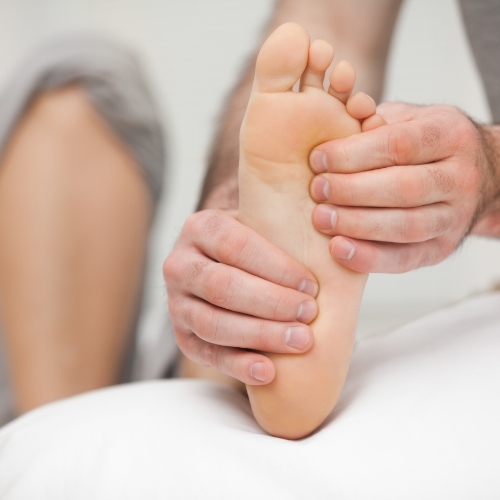
You could be suffering from foot pain for a variety of reasons. A foot injury can cause pain that ranges from mild to excruciating. Foot pain relief for these conditions does not have to entail costly surgeries or medications. You can begin with physical therapy!
While some foot pain occurs suddenly as a result of an acute injury, it can also develop gradually as a result of a chronic underlying condition.
Sprains and strains occur frequently, and they are often confused with one another! A sprain happens when a ligament is overstretched or torn, whereas a strain happens when a muscle or tendon is overstretched. Both of these injuries should be evaluated by a medical professional to ensure that no long-term damage occurs.
Bursitis occurs when the tendons rub against the anti-friction sacs known as “bursae,” causing irritation and discomfort. This condition can also affect your elbow, shoulder, and hip, but it most commonly affects your foot and heel.
A fracture occurs when the bone is subjected to excessive force or trauma, causing it to crack or break completely. A foot or ankle fracture could necessitate weeks of rest to ensure proper healing.
Several tendons work together to form the arch of your foot. When the tendons pull together properly, your foot will form a proper arch. Your foot will form a very small arch or no arch at all if the tendons do not pull together properly. This is known as a “fallen arch” or “flat foot,” and it can cause pain or discomfort in the long run.
Plantar fasciitis is caused by an inflammation of the connective tissue on the bottom of the feet. This can happen as a result of aggravated overuse, such as prolonged standing, poor posture, or footwear that lacks proper arch support.
Overuse of the tendons can result in tendonitis, a condition in which they become inflamed over time. Even simple tasks, such as walking to the end of the driveway to check the mail, can be difficult with tendinitis. This condition can become chronic and excruciatingly painful over time, exacerbating the situation.
Arthritis is a common inflammatory condition that affects joints and causes foot pain. Osteoarthritis and rheumatoid arthritis are the most common types. Both types of arthritis can have a significant impact on the foot and ankle joints. Arthritis can affect people of all ages.
When the tarsal tunnel (the nerve that runs from the ankle to the foot) becomes pinched and painfully inflamed, this happens. Sharp, shooting pains, “pins and needles” sensations, and burning sensations in the feet are all symptoms.
Physical therapy, fortunately, has been shown to aid in the rehabilitation of injured feet as well as the relief of acute and chronic pain. Request an appointment with one of our licensed and qualified Lenexa, KS physical therapists today to discuss how we can assist you!
Physical therapy provides a structured approach to relieving foot pain and restoring function. During your first visit at PWR Physio, a licensed physical therapist will perform a detailed evaluation that may include:
This information guides the development of a personalized treatment plan.
Treatment may include strengthening exercises, mobility work, manual therapy, and movement retraining to reduce irritation and improve function. Patients are also guided on proper footwear choices and daily habits that support recovery.
As treatment progresses, your therapist will adjust your plan to reflect your improvement and activity goals. Therapy often focuses on strengthening the muscles that support the arch, ankle, and lower leg while improving flexibility and joint mobility.
Patients frequently experience:
Your therapist will also provide strategies to help you maintain long-term foot health and prevent recurrence.
At PWR Physio, treatment begins with a comprehensive evaluation and a clear plan tailored to your condition. Our goal is to help you move more comfortably and return to your normal routine.
Treatment may include:
If you are searching for a physical therapist in Lenexa, KS, our team is prepared to help you take the next step.
1. How do I know what is actually causing my foot pain?
A licensed physical therapist will evaluate not only your foot, but also your ankle mobility, walking mechanics, and lower-body strength. In many cases, foot pain is influenced by movement patterns elsewhere in the body, and a full assessment helps identify the true source of irritation.
2. Can physical therapy help conditions like plantar fasciitis or heel pain?
Yes. Conditions such as plantar fasciitis, tendon irritation, and arch-related pain often respond well to structured physical therapy. Treatment focuses on improving tissue tolerance, restoring mobility, and strengthening the muscles that support the foot and ankle.
3. Why does my foot pain feel worse in the morning or after activity?
This is often related to tissue stiffness and load sensitivity. After periods of rest, structures such as the plantar fascia or tendons may feel tight. As activity increases, these tissues can become irritated if they are not yet strong enough to handle the load efficiently.
4. Will I need orthotics or special footwear?
In some cases, temporary support through footwear or orthotics can help reduce strain. However, long-term improvement typically comes from strengthening the foot and improving movement mechanics rather than relying solely on external support.
5. How long does it usually take to see improvement?
Many patients begin to notice changes within a few weeks, particularly when they follow their prescribed exercise program consistently. The exact timeline depends on how long symptoms have been present and the underlying cause.
6. Can foot pain return after it improves?
It can if the underlying contributors—such as poor mechanics, weakness, or improper loading—are not addressed. Physical therapy focuses on correcting these factors to reduce the likelihood of recurrence.
You should be able to move around freely and without pain! PWR Physio will help you regain mobility, comfort, and overall function while removing painful restrictions.
Allowing foot pain to take control of your life is not an option you should consider. Make an appointment with us today, and we’ll get you back up and running as soon as possible!
